Commercial Cleaning LeedsA Cleaner Standard
For Your Business.
From the reception floor to the last shared workspace. Commercial cleaning for offices, schools and industrial premises across Leeds.
Discuss Your Cleaning The Details Make The Difference.
A Clean Space.
A Good Day’s Work.
Regular cleaning, periodic deep cleans and practical schedules for commercial premises.
Find Your ServiceClean Is More Than
A First Impression.
The right cleaning routine protects the way a building is used, from a busy washroom to a clear warehouse aisle.
We bring commercial cleaning requirements into a practical specification: what needs doing, how often and when the space can be released. Whether you manage one office, a school estate or a commercial unit, start with the tasks that matter to your building.
Commercial cleaning covers the routine and periodic care of business premises. It can combine floors, accessible surfaces, shared facilities and ordinary waste handling, with specialist work identified separately. A useful schedule connects those tasks to occupancy, materials and the risks present.
We welcome enquiries from facilities managers, commercial landlords, business owners, contractors and education premises teams. Tell us about the space and the outcome you need, including problems with an existing routine. Your enquiry gives us the information to discuss an appropriate local arrangement, with any work and quotation agreed separately.
One Building.
Different Cleaning Needs.
Find the service that fits your premises. Several tasks can be combined into one clearly defined scope.
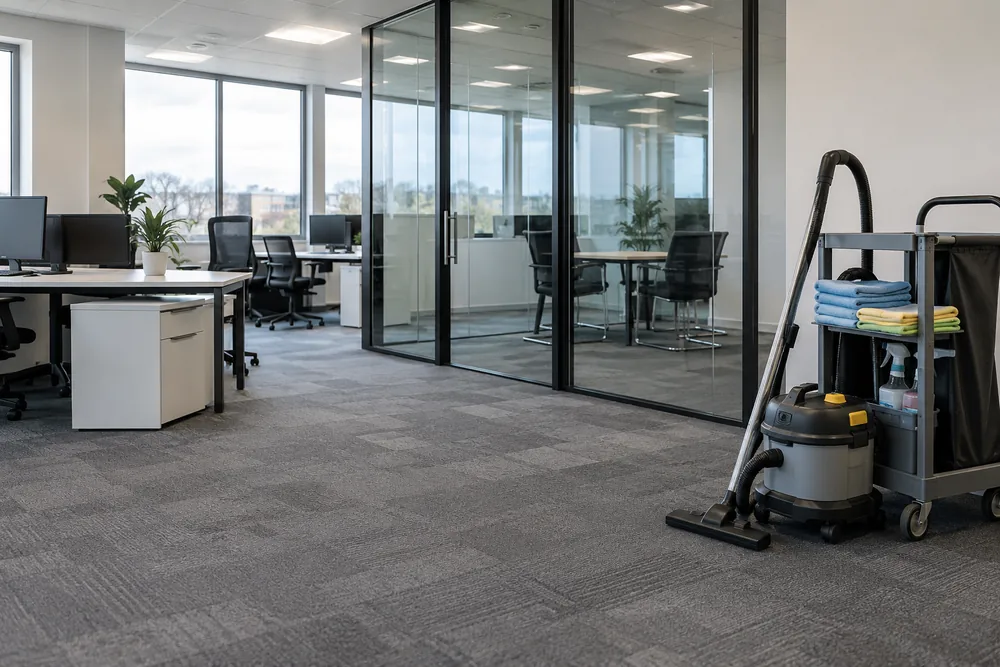
Office Cleaning
Workspaces, meeting rooms and shared kitchens. Match the routine to attendance, access and the finishes in your office.
Explore Office Cleaning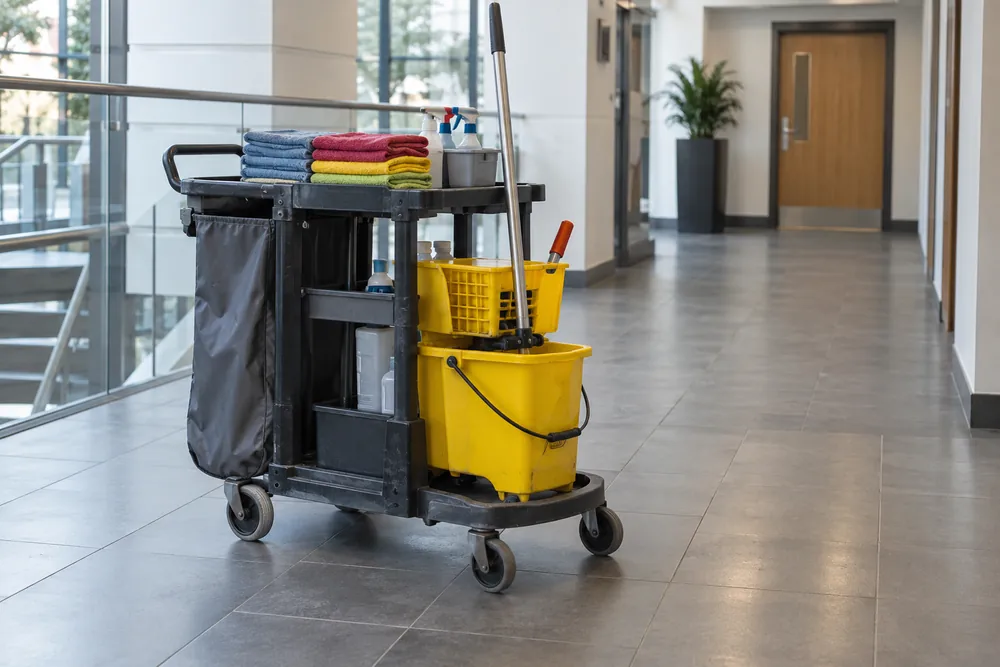
Contract Cleaning
A written task schedule for regular cleaning, with defined frequencies, responsibilities and a practical review process.
Explore Contract Cleaning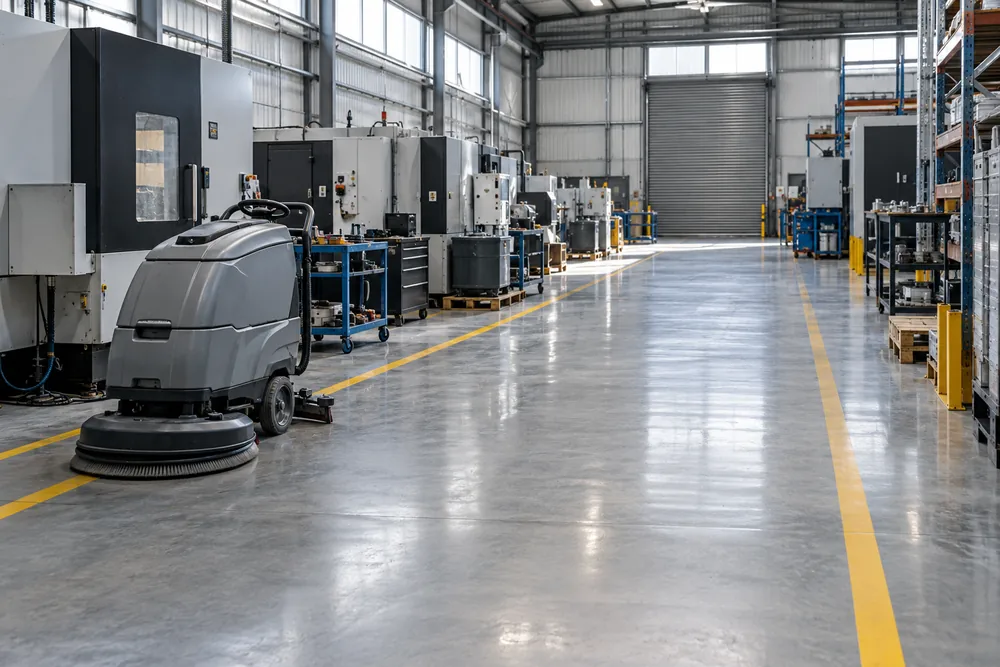
Industrial Cleaning
Workshop floors, welfare areas and suitable production premises. Assess soil, machinery and safe isolation before work starts.
Explore Industrial Cleaning
School Cleaning
Classrooms, corridors and shared facilities, with term-time routines and separately scoped holiday work.
Explore School Cleaning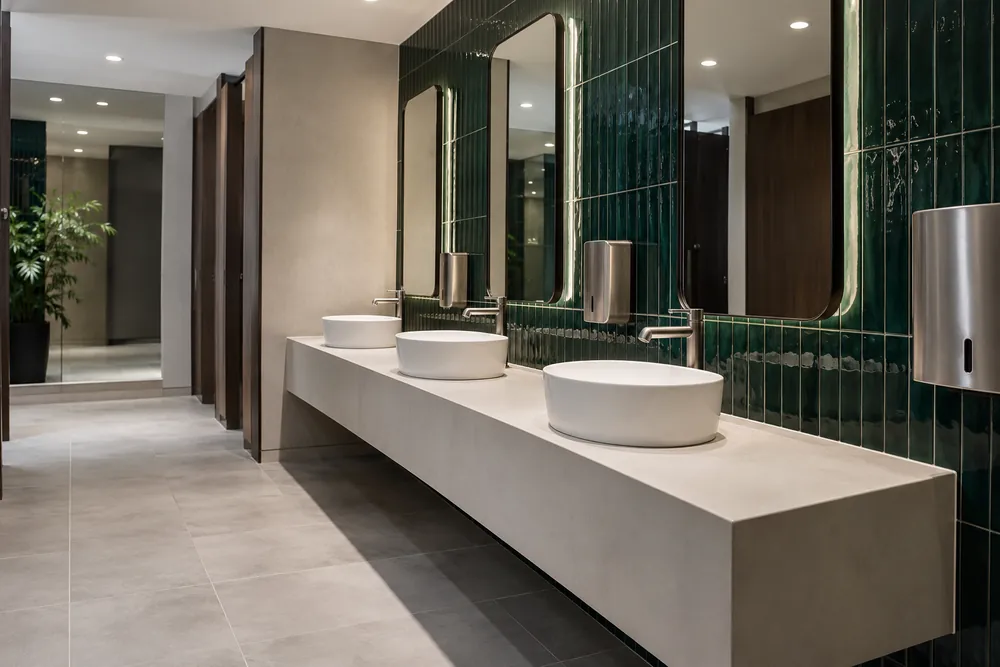
Washroom Services
Toilets, basins and contact surfaces, with consumable responsibilities and specialist collections agreed where needed.
Explore Washroom Services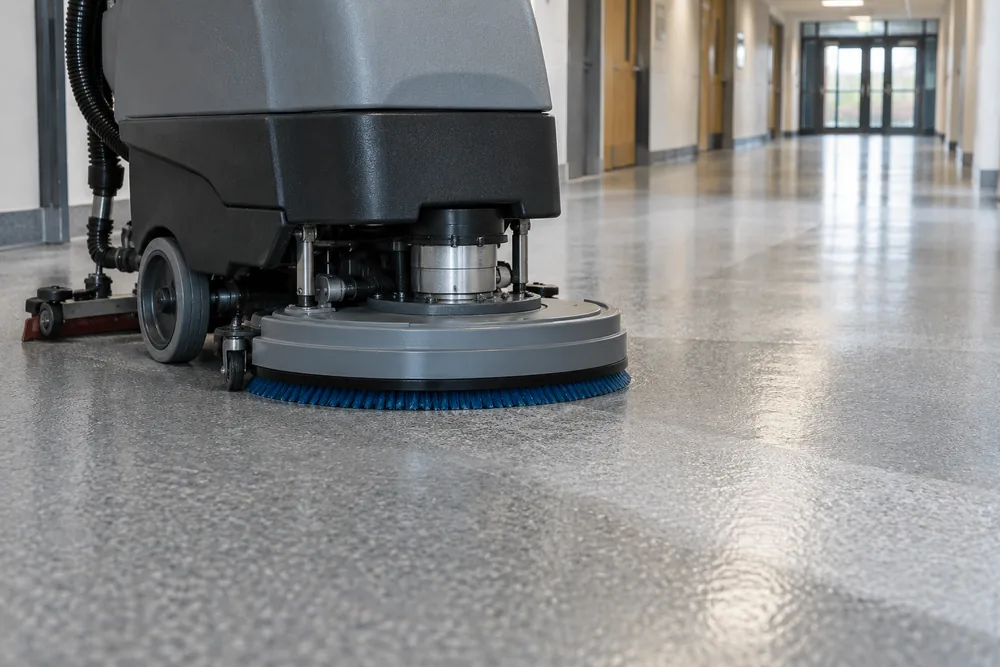
Commercial Deep Cleaning
Detailed periodic work for accumulated dirt, premises changes and areas beyond the regular maintenance schedule.
Explore Commercial Deep Cleaning
Warehouse Cleaning
Storage aisles, suitable hard floors and staff areas, coordinated with traffic routes and the release of stock zones.
Explore Warehouse CleaningTell Us About
Your Space.
Share your postcode, building type and main priorities. We can help identify what the cleaning brief needs to cover.
Make An EnquiryUnderstand The Duty.
Specify The Work.
A cleaning contract can support your responsibilities. It does not transfer all responsibility for the premises.
Who Needs Workplace Cleaning?
In Leeds, the relevant English workplace rules apply. Employers and others controlling premises covered by the Workplace (Health, Safety and Welfare) Regulations 1992 have duties concerning cleanliness, waste accumulation and safe routes. Regulation 9 addresses cleanliness of the workplace, furniture, furnishings and fittings, while regulation 12 deals with floor and traffic route conditions.
These duties do not mean every business must buy an external cleaning service. They mean suitable arrangements are needed for the actual workplace and its risks. A cleaning specification can provide a practical record of those arrangements and identify the tasks that remain with your own staff.
Offices, warehouses, workshops and schools need routines matched to their use. Food-handling activities and education settings can have additional hygiene considerations. The relevant duties belong in the assessment, rather than a claim that one general clean makes every building compliant.
Read The Workplace Regulations →Make The Cleaning Itself Safe
Cleaning can introduce risks as well as remove dirt. Wet floors, cables, chemical exposure and moving equipment need controls suited to the task. Barriers, sensible sequencing and drying time can matter as much as the chosen product.
The Control of Substances Hazardous to Health Regulations 2002 apply to relevant exposure from cleaning products and other substances. The task needs assessment, suitable products, correct dilution and appropriate storage. A product safety sheet supports that process but does not replace the assessment.
For schools, follow the current UKHSA guidance on routine cleaning and situations needing enhanced measures. For industrial premises, identify process contamination before choosing equipment. Suspected asbestos, hazardous dust and unknown chemical spills require specialist assessment, not an ordinary cleaning assumption.
HSE Guidance For Cleaning →Good Cleaning Starts
Before The First Visit.
Make the requirements specific enough to quote, deliver and check.
- 01
Describe The Premises
Send the postcode, building type, approximate area and preferred frequency. Explain the main problems and when the premises are occupied. Photographs can help with an initial discussion, but leave out confidential material and security details.
- 02
Agree The Scope
A walkthrough may be needed to check floor finishes, access, soil and equipment requirements. Separate regular work from an initial deep clean. Record exclusions, consumable responsibilities and any preparation your staff need to complete.
- 03
Set Up Safely
Confirm the cleaning window, storage, keys, alarm arrangements and safe working method. Identify restricted rooms and routes that must stay open. Industrial and warehouse work also needs coordination with vehicles, plant and shutdown procedures.
- 04
Check And Review
Inspect the agreed tasks, record access problems and identify maintenance defects that cleaning cannot fix. Review the routine when occupancy or operating hours change. Keep updates in the written schedule so responsibilities stay visible.
What Shapes
Your Cleaning Cost?
The floor area starts the conversation. The detail shapes the specification.
Request A Cleaning DiscussionArea, Condition And Frequency
Floor area helps describe the building, but it is only one part of the job. A small premises with several washrooms or densely arranged desks can need more attention than a larger open room. Heavy soil, neglected edges and old residues can also require an initial treatment before regular cleaning starts.
Frequency should reflect use rather than a standard package. Washrooms, entrances and busy kitchens may need different attention from quieter rooms. Periodic floor treatment or carpet extraction should appear separately so the ongoing visit price can be compared fairly.
Access, Materials And Extras
The available cleaning window, security process, floor materials and equipment access all affect the method. Restricted areas, stock movement and staged shutdowns can change labour requirements. Say whether your staff can clear surfaces or move furniture before a visit.
Check whether products, machinery and consumables are included, and distinguish bin emptying to your collection point from taking business waste away. Ask for the scope, exclusions and change process in writing. A like-for-like specification is more useful than comparing headline figures for different tasks.
From City Offices
To Industrial Floors.
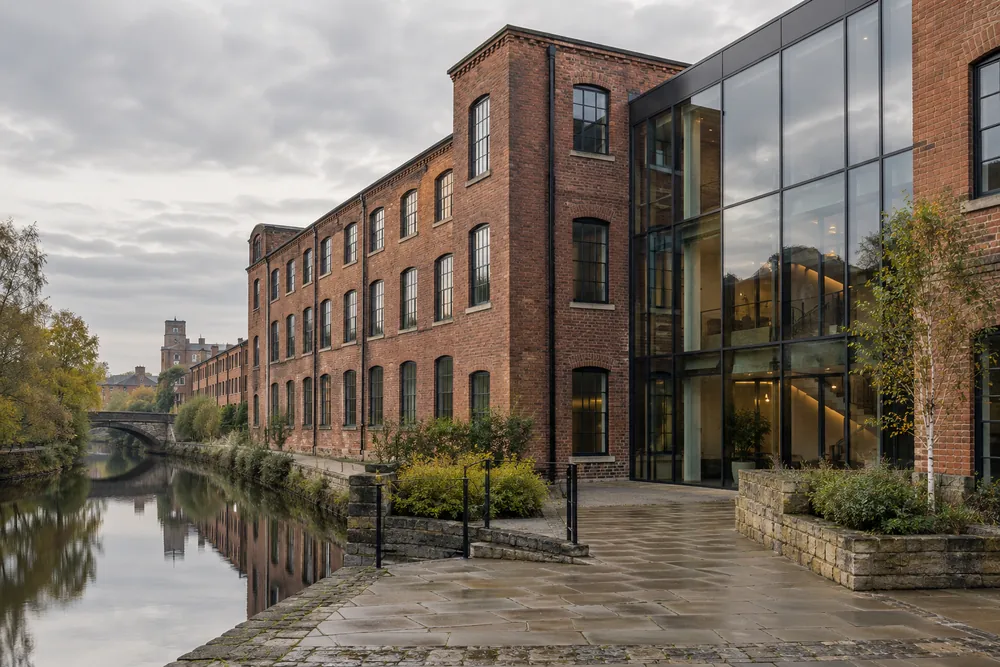
Leeds brings together modern office quarters and older industrial buildings. Wellington Place combines office space with restaurants and shared facilities, while Holbeck Urban Village includes businesses in converted industrial buildings.
Those settings call for different cleaning decisions. Shared entrances need clear landlord and tenant responsibilities, while converted buildings may combine several floor finishes and awkward access. These are scoping considerations, rather than claims to serve any named development.
At Kirkstall Forge, offices sit in a riverside setting with a dedicated railway station. In the wider district, market towns and retail locations bring different opening hours and visitor patterns. Tell us how people use your building so the cleaning window fits its operation.
Explore Our Cleaning Locations →A Routine With
Room For Change.
Separate Cleaning From Maintenance
Damaged flooring, leaks, failed seals and ventilation problems do not disappear with another cleaning visit. A useful reporting route identifies these defects and sends them to the person responsible for the building. That keeps repeat cleaning from becoming a substitute for a necessary repair.
Agree what good looks like for each task. A floor should be assessed for suitable cleanliness and safe use, rather than a gloss finish that may not suit the material. Washrooms need usable supplies and clean contact points as well as a presentable appearance.
Keep The Specification Current
A new shift, busier meeting schedule or change of tenant can alter cleaning demand without changing the building footprint. Review frequencies when use changes, and identify periodic work before the need becomes urgent. Include closures and events in the discussion.
For a regular arrangement, our contract cleaning guide explains the written schedule and review points. For a one-off requirement, the deep cleaning guide helps define the work and its limits before a quotation is agreed.
Questions, Answered.
A few practical answers before you enquire.
What Does Commercial Cleaning In Leeds Include?
Commercial cleaning in Leeds can include offices, washrooms, communal areas, warehouses and suitable industrial spaces. The exact tasks depend on the building, surfaces and use. A written schedule should define frequencies, consumables, exclusions and periodic work, so you can compare quotations against the same requirements and check what has been completed.
Is A Business Legally Required To Hire Cleaners?
Business cleaning duties require suitable workplace conditions, but they do not create a general requirement to hire an external contractor. Relevant employers and premises controllers must meet workplace cleanliness and safety duties. How that is organised depends on the building and risks, with additional requirements for particular activities and settings.
How Much Does Commercial Cleaning Cost?
Commercial cleaning costs reflect the tasks, condition, frequency, access and type of premises. Floor area is useful, but washroom provision, furniture and contamination can change the labour involved. Send a site summary and preferred cleaning window so a suitable scope can be discussed before a price is proposed for your building.
Can Cleaning Happen Before Or After Business Hours?
Commercial cleaning before or after business hours can be discussed as part of the scope. Access, alarms, lone working and time for floors to dry need to be considered. Tell us your opening hours, shift pattern and any restricted rooms so the proposed arrangement can reflect how the premises operate.
Do You Cover Businesses Outside Leeds City Centre?
Commercial cleaning enquiries are welcome from Leeds city centre and nearby districts including Holbeck, Kirkstall, Morley, Pudsey, Horsforth and Wetherby. Coverage for your premises depends on the service, postcode and working window. Include these details when you enquire so suitability can be checked before any visit or work is agreed.
Can We Book A One-Off Deep Clean?
A commercial deep clean can be requested as a one-off scope for accumulated dirt, periodic detail or a premises handover. Define the surfaces, access and intended result before agreeing work. A deep clean does not replace repairs or specialist hazardous-material treatment, and any continuing maintenance should be discussed separately.
What Happens After I Send An Enquiry?
Your commercial cleaning enquiry is used to understand the premises, service and preferred arrangements. With your agreement, the details may be passed to a suitable local firm to discuss the work. Sending the form does not book cleaning or commit you to a contract, and any quotation must be agreed separately.
What Does Your
Building Need?
Tell us the service, postcode and preferred arrangement. We’ll use your enquiry to discuss a suitable scope, with local firm sharing only with your agreement.
For a regular contract, include the areas and frequency you have in mind. For periodic work, explain the problem and any deadline or shutdown window. No cleaning is booked by sending this form.