A Practical Specification For Your Office
A tidy reception is only part of office cleaning. Tea points, shared desks, meeting rooms, door furniture and washrooms collect different kinds of soil, and they need different methods. We start by separating presentation tasks from hygiene tasks so that a polished entrance does not distract from neglected taps or kitchen handles.
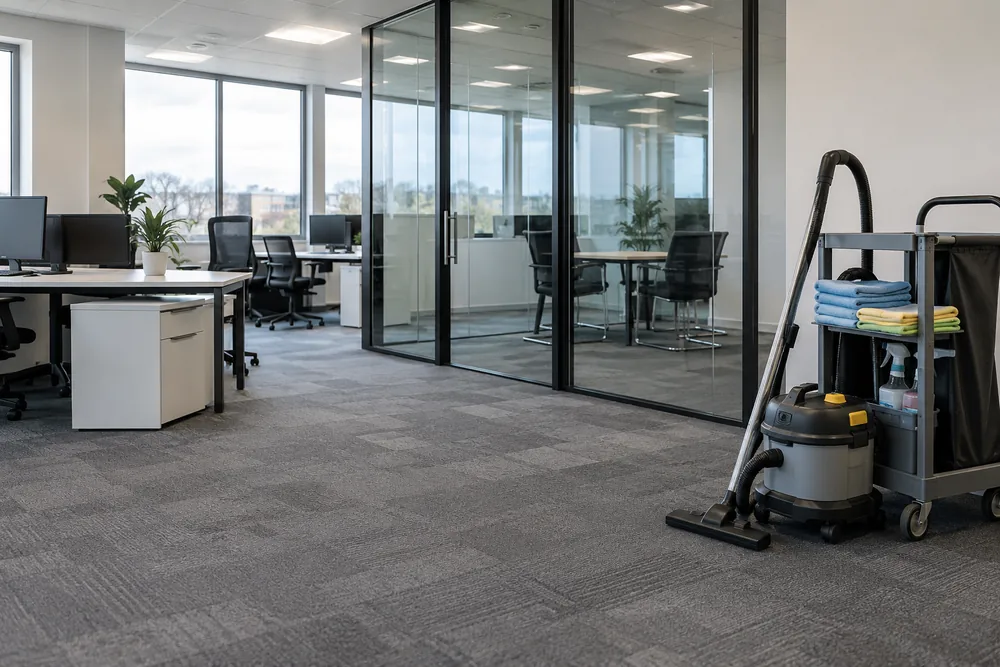
The scope can cover vacuuming carpet tiles, damp cleaning suitable hard floors, removing ordinary waste to an agreed collection point, wiping accessible surfaces and cleaning internal glass. It should say whether desk surfaces are cleared by staff first. Screens, specialist equipment, personal belongings and confidential papers need explicit handling instructions rather than assumptions.
For multi-occupancy buildings, distinguish the landlord's common areas from the tenant's space. Shared stairwells, lifts and reception areas can otherwise fall between contracts. A room-by-room specification gives facilities managers a useful basis for comparing quotations and checking completed work.
When Your Cleaning Routine Needs A Review
A change in office attendance often changes cleaning needs. Busy collaboration days can create more kitchen and washroom demand than quiet days, even when the floor area stays the same. We look at occupancy, visitor use and the route people take from the entrance to their desks.
Review the schedule if bins overflow before the next visit, washroom supplies run out or dust remains around desk clusters. Repeated marks on floors may point to the wrong product, inadequate entrance matting or insufficient drying time. Simply adding more detergent can make residue worse.
A move, refurbishment or new tenancy may need a separate initial deep clean before a regular schedule starts. That first clean should be identified and quoted separately. Routine visits should not be expected to remove old adhesive, paint splashes or ingrained carpet staining without a specific method and allowance.
Office Cleaning And Workplace Duties
The Workplace (Health, Safety and Welfare) Regulations 1992, regulation 9, require relevant workplaces and their furniture, furnishings and fittings to be kept sufficiently clean. They do not require every office to employ an external cleaning contractor. Employers and those controlling premises still need arrangements that meet their duties.
Cleaning chemicals need task-specific assessment under the Control of Substances Hazardous to Health Regulations 2002. Product safety data informs that assessment but does not replace it. Storage, dilution, ventilation and skin exposure matter even with products used every evening.
HSE's cleaning guidance also identifies wet floors and trailing cables as avoidable risks. Work should be sequenced so occupants can move safely, with barriers where appropriate and floors allowed to dry. An unattended warning sign is not a complete control for an accessible wet corridor.
How An Office Clean Is Set Up
First, share the postcode, approximate area, opening hours and priority problems. A walkthrough can then establish floor finishes, meeting room use, waste routes, available water and safe equipment storage. Security arrangements need a named contact and a clear record of key or access-card responsibilities.
Next, agree daily, weekly and periodic tasks. Set expectations for desk clearance, shared appliances and inaccessible areas, and identify who replenishes soap and paper. Check whether visitors, evening meetings or lone working change the proposed cleaning time.
At handover, inspect the first clean against the schedule rather than a general impression. Record missed tasks, access problems and any damaged surfaces. A short review after the routine settles helps adjust frequencies without losing track of what was originally agreed.
What Affects The Cost
Office cleaning costs depend on more than floor area. The number of kitchens and toilets, density of furniture, amount of internal glass, chosen frequency and access window all affect the work involved. A compact office with several washrooms can need more attention than a larger open floor.
Ask whether equipment, consumables, periodic carpet cleaning and waste removal are included. Ordinary bin emptying to your collection point is different from taking business waste off site. Compare the same task list and ask how changes in occupancy or opening hours will be handled.
For a wider programme, see contract cleaning. If you need a reset before a new routine, consider commercial deep cleaning. Our main commercial cleaning Leeds guide explains how these services fit together.