Cleaning In An Operational Industrial Building
Industrial premises collect contamination that ordinary office routines are not designed to handle. Tracked-in grit, packaging debris, process dust and oily residues each call for a different approach. The starting point is identifying what is present and whether general cleaning is suitable for the task.
The agreed scope may include accessible hard floors, pedestrian routes, welfare rooms and non-production surfaces. Plant interiors, electrical cabinets, confined spaces, hazardous residues and specialist decontamination should not be treated as standard cleaning. Those tasks need competence and controls matched to the actual hazard.
We ask about production activity, vehicle movements, shift changes and areas that must remain open. A floor can look ready for cleaning but still be unsafe because of moving equipment or an unknown spill. The schedule needs to work with the site rules rather than relying on cleaners to negotiate around live operations.
Choosing The Right Floor Method
Start by identifying the floor coating and its condition. A sealed concrete floor, resin surface and untreated concrete can respond differently to moisture and chemicals. Loose debris should be removed by a suitable method before wet cleaning so grit is not dragged across the finish.
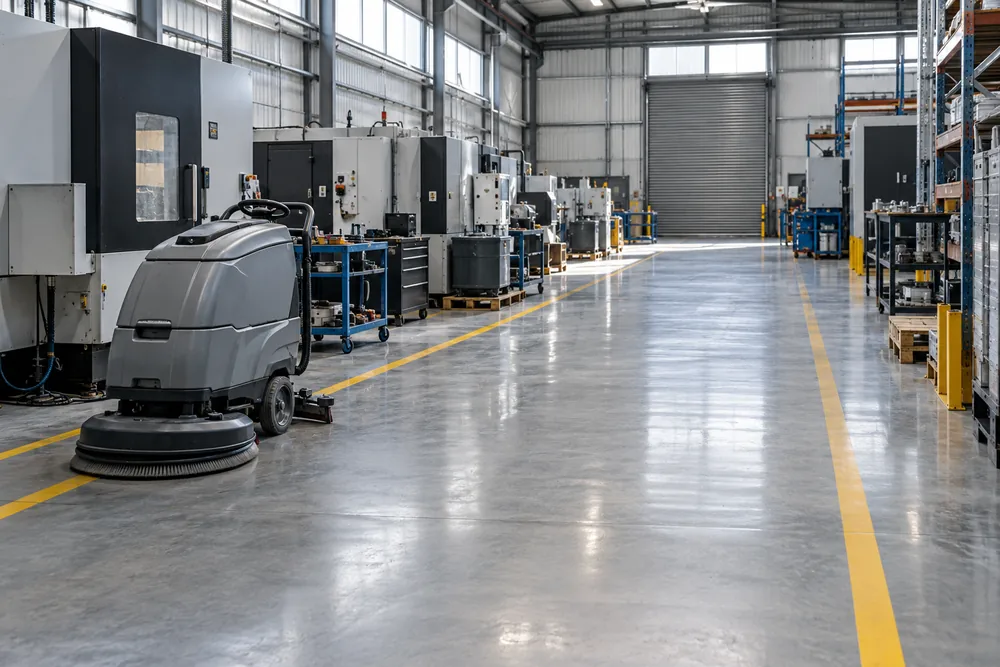
Machine selection depends on the available space, contamination and recovery of dirty water. A compact scrubber may suit narrow routes, while open floors allow a different machine. Edges and areas behind fixed items need explicit allowance because machine access alone rarely covers the whole floor.
Unknown dust needs investigation before disturbance. Dry sweeping can make an inhalation hazard worse where harmful dust is present. Tell us about the processes producing the contamination and provide relevant safety information so the task can be accepted, adapted or referred for specialist assessment.
Industrial Cleaning Regulations And Controls
The Workplace (Health, Safety and Welfare) Regulations 1992 address cleanliness and safe workplace routes. The Control of Substances Hazardous to Health Regulations 2002 apply where workers may be exposed to hazardous substances, including process-generated dust as well as cleaning products. Assessment must address the actual work, exposure and controls.
The Provision and Use of Work Equipment Regulations 1998 are relevant to equipment used at work. Cleaning machinery needs to be suitable and used by people with appropriate information and training. Cleaning near production plant also requires agreed arrangements for safe isolation where necessary.
No general cleaning quotation should imply that asbestos, combustible dust or chemical contamination is included. Flag these risks at enquiry stage. A standard floor cleaning method cannot stand in for a specialist assessment or the site's own permit and isolation procedures.
The Industrial Cleaning Process
First, define the cleaning boundary and inspect the contamination. Confirm access, usable water, drainage arrangements, power if needed and any restrictions on products. Discuss where dirty water and recovered debris can lawfully go rather than assuming a nearby drain is suitable.
Next, agree isolation, pedestrian separation and the sequence of work with the site contact. Select the method and test it on an appropriate small area when the floor finish is uncertain. Set a realistic drying and reopening point before the work starts.
After cleaning, check the agreed surfaces and routes, record any residues or damaged coating that remain and return the area through the site's handover procedure. Some marks are changes to the substrate rather than removable soil. That distinction should be explained before any repeat treatment is proposed.
What Determines The Quotation
Industrial cleaning costs depend on contamination, floor condition, machine access, isolation needs and the area that can be released at one time. A clear open floor is a different task from routes broken up by equipment and stock. Working through several small shutdown windows can also change the labour requirement.
Confirm whether waste handling, welfare rooms and perimeter detail work are included. Heavy deposits or specialist residues may require separate work, and there should be a process for approving it. Share photographs and a practical description of the soil, but keep sensitive production information out of the enquiry form.
See warehouse cleaning for storage and logistics premises and deep cleaning for periodic detail work. Our commercial cleaning Leeds overview explains how regular maintenance can follow an initial clean.