The Details
Set The Standard.
Commercial cleaning should be easy to specify and useful to check. Our approach starts with the building, its use and the tasks that need doing.
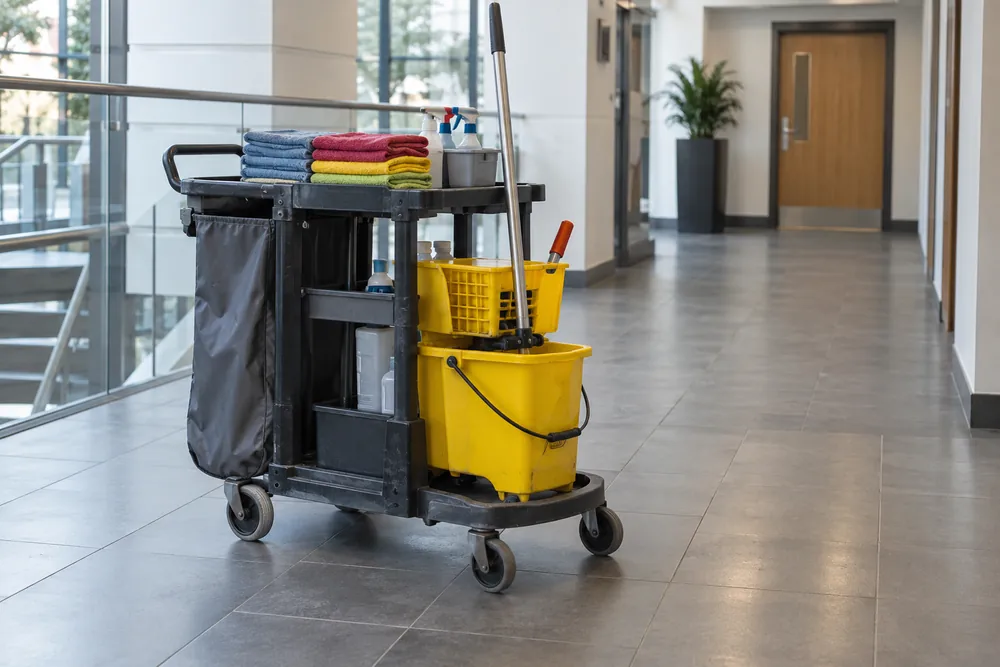
Good cleaning is a clear task, the right method and a result you can check.
A Service For Commercial Premises
Commercial Cleaning Leeds is focused on business premises across Leeds and nearby districts. We help facilities managers, commercial landlords, contractors and education premises teams describe routine and periodic cleaning needs. Offices, schools, warehouses and industrial spaces each need a specification that reflects their actual use.
A useful enquiry starts with the postcode, building type, preferred cleaning window and the areas causing concern. With your agreement, your details may be passed to a suitable local firm to discuss the work. No booking is made by sending the form, and the scope, provider and quotation must be agreed separately.
The Method Follows The Material
A floor finish, wall surface or fitting can be damaged by the wrong chemical or technique. The cleaning method should consider material compatibility, soil, access and drying time before work starts. Where the surface or treatment is uncertain, a small test can help establish what is appropriate.
We describe normal cleaning boundaries clearly and identify tasks that need specialist assessment. Hazardous dust, suspected asbestos, unknown spills and high-risk access cannot simply be added to an ordinary schedule. Existing damage should also be distinguished from removable dirt during the initial assessment.
Safety, Hygiene And Useful Records
Cleaning arrangements should support the relevant Workplace (Health, Safety and Welfare) Regulations 1992 duties. Chemical exposure needs consideration under the Control of Substances Hazardous to Health Regulations 2002, and equipment must be appropriate for its use. Those are requirements to address through task-specific assessment, rather than claims of an accreditation.
The HSE cleaning guidance is a useful starting point for common risks. School work should also reflect UKHSA guidance for education settings. The final schedule needs practical detail on access, products, separation, consumables and how problems are reported.
Define It, Then Review It
A written schedule makes it easier to compare quotations and inspect completed tasks. It should separate regular work from periodic tasks and explain who supplies equipment and consumables. Areas that cannot be accessed, cleaning exclusions and any preparation by your staff should be visible before the start.
Review the arrangement when attendance, shifts or use of the building changes. Cleaning should not be used to hide a maintenance problem, and a reporting route should distinguish missed work from damaged materials or faulty fittings. Explore our contract cleaning approach or send a cleaning enquiry to start with your own requirements.