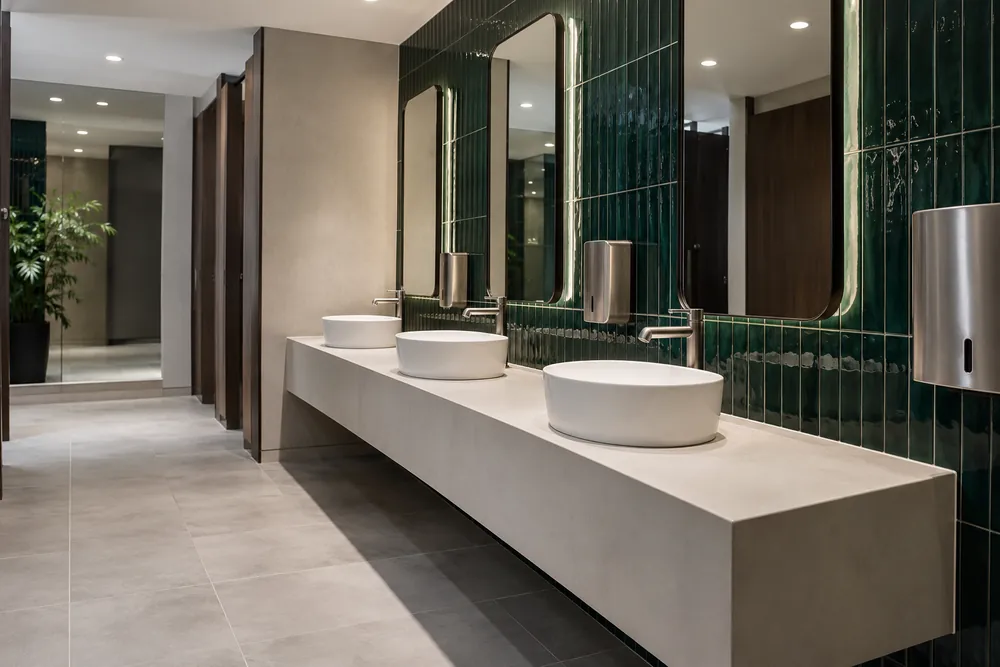
What Washroom Services Can Include
Washrooms need a programme that covers both visible condition and the points people repeatedly touch. Basins, taps, flush controls, door handles and dispenser fronts need attention alongside cubicles and floors. The schedule should identify how often these areas are cleaned and who checks them between visits.
A scope can include cleaning toilets and urinals, removing ordinary surface soil, suitable descaling, cleaning mirrors and replenishing agreed supplies. Soap, paper and other consumables may be supplied by the business or included by agreement. Make the arrangement explicit so a clean washroom is not left without the materials people need.
Sanitary waste collection and dispenser rental are separate service elements, even where a combined arrangement is requested. Confirm what can be provided, the collection schedule and any documentation before relying on it. Do not assume a standard cleaning visit includes specialist collection or maintenance of all fitted equipment.
Preventing Cross-Contamination
Work should be organised so cleaning equipment does not transfer soil from toilets to handwashing areas or food spaces. Separate cloths and mops, clear task order and safe handling are practical controls. Used reusable equipment needs an appropriate cleaning and drying routine before storage.
Product choice must match the surface. Acid descalers can harm some finishes, while abrasive pads can leave lasting marks on fittings and partitions. Identify stone, coated metal and specialist surfaces before treatment, and test compatibility where the method is uncertain.
Never mix cleaning chemicals or add products to an unknown residue. Good ventilation and controlled dilution are part of the method. Recurring odour may also indicate a drainage, ventilation or maintenance fault that cleaning alone cannot resolve, so the reporting route needs to include the facilities contact.
Relevant Washroom Requirements
The HSE guidance on workplace facilities explains the need for suitable toilets and washing facilities, with attention to cleanliness and supplies. The Workplace (Health, Safety and Welfare) Regulations 1992 include sanitary convenience and washing facility requirements. The cleaning schedule supports these duties but does not replace assessment of the facilities themselves.
The Control of Substances Hazardous to Health Regulations 2002 are relevant to exposure from cleaning agents and the task. An assessment should consider splashes, skin contact, ventilation and the suitability of protective equipment. A safety data sheet alone does not describe how a product is safely used in your washroom.
Where waste leaves the premises, business waste responsibilities also need to be addressed. The government's business waste guidance explains duties around safe storage and authorised transfer. Specialist waste arrangements should identify the waste type and the responsible provider.
Agreeing A Washroom Routine
Start by listing the toilets, urinals, basins, showers and changing spaces. Discuss occupancy, visitor access and peak demand. A small public-facing washroom may need more frequent checks than a larger facility used only by a limited group of staff.
Next, agree cleaning frequencies, supply levels, equipment separation and safe storage. Set a method for closing or dividing areas while cleaning takes place. People still need access to suitable facilities, so the sequence should be coordinated with the building's operating needs.
At handover, check contact surfaces, floors and consumables against the specification. Record defects such as leaks, broken dispensers or damaged seals rather than masking them with repeated cleaning. Periodic review helps distinguish inadequate cleaning frequency from a maintenance issue requiring another trade.
Costs, Supplies And Related Work
Washroom service costs depend on the number of fittings, level of use, frequency, condition and products required. Heavy scale or long-standing residue may need a separate initial treatment. Dispensers, consumables and specialist collections should be itemised so quotations are comparable.
Ask who orders stock, who stores it and what happens if a dispenser changes. Confirm the working hours and any accessibility requirements that affect the closure sequence. Where your own staff carry out daytime checks, agree which tasks remain with them and how they report problems.
Washroom work can form part of contract cleaning or support a wider office cleaning schedule. Our commercial cleaning Leeds overview explains how to put these tasks into one specification without losing the detail needed to check each area.