What A Commercial Deep Clean Involves
Deep cleaning means a defined programme of more detailed work than routine maintenance. It is not a standard package with the same tasks in every building. A useful scope identifies the surfaces, soil, access and completion criteria so both sides understand what the work is intended to achieve.
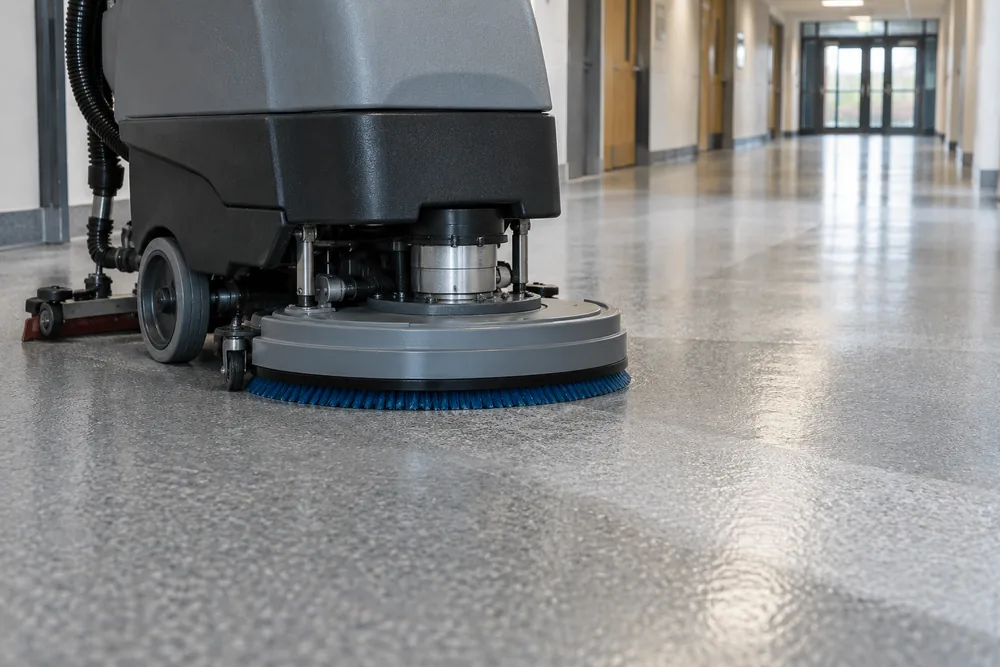
Typical tasks can include cleaning accessible edges and ledges, detailed washroom treatment, suitable hard floor scrubbing and work around furniture that routine visits cannot reach. Carpet treatment, internal glazing and equipment cleaning need to be identified separately. Each material has its own limits and should not be subjected to the same product or machine.
A deep clean is also different from repair. Etching, worn coatings, damaged grout and permanent staining may remain after removable soil has gone. A walkthrough should record those conditions early so the proposed treatment is realistic and repeated cleaning does not damage the substrate.
When A Deep Clean Is Useful
Consider a deep clean before introducing a new regular contract, after a period of reduced maintenance or when areas are released during a closure. It can address neglected perimeter detail and persistent residue that ordinary visits are not scoped to remove. Explain what has changed rather than simply requesting a stronger product.
Commercial tenancy handovers need careful boundaries. Agree whether the scope includes the tenant's rooms, landlord areas, fixtures, carpets and any furniture left in place. If a lease has cleaning requirements, share the relevant specification so the quotation can respond to it without promising a legal outcome.
Refurbishment work may leave dust, adhesives or paint that need separate assessment. Confirm the works are finished and safe access has been released before cleaning begins. Ongoing building work can immediately recontaminate cleaned surfaces and make the handover result difficult to assess.
Safe Products And Appropriate Claims
A deep clean does not automatically mean disinfection, fogging or sterilisation. Cleaning removes soil, while disinfection uses a suitable product and method for a defined purpose. Contact time, dilution, surface compatibility and any need to rinse must follow the product instructions.
The Control of Substances Hazardous to Health Regulations 2002 require assessment and control of relevant chemical exposure. Stronger products can create greater splash, inhalation or surface damage risks. The HSE guidance for cleaners highlights skin, breathing and corrosive product hazards.
Workplace floor safety also matters during the clean itself. Segregation, cable routing and drying should be included in the method. If asbestos, unknown dust, sharps or specialist contamination is suspected, stop and arrange an appropriate assessment rather than adding it to general deep cleaning work.
How The Deep Cleaning Process Works
Begin with photographs and a site description, followed by a walkthrough where needed. Identify surfaces, staining, loose items, fixed equipment and areas requiring particular care. Confirm who moves furniture and how rooms will be released so cleaning can reach the agreed boundaries.
Agree a written scope and sequence. Where appropriate, trial the proposed method on a small area before treating a larger floor or surface. Clarify water, power, waste arrangements and drying time, including when people can safely return.
After the work, inspect the defined areas with the site contact or through an agreed record. Separate removable dirt from damage or marks outside the cleaning scope. A handover should identify any residual issue and the maintenance routine that will help avoid the same build-up returning.
Deep Cleaning Costs And Follow-On Care
Costs depend on condition, surface type, access and the work needed to move or protect items. A clear room with light residue is a different job from a densely furnished space with heavy deposits. Specialist treatments, waste removal and work outside ordinary access hours can also affect the quotation.
Ask for clear inclusions, exclusions and assumptions about the condition of the building. Do not rely on an estimated floor area alone when the main work is detailed edges or fittings. A scope that describes outcomes and limits is easier to compare than an undefined whole-building clean.
A deep clean is most useful when followed by a suitable routine. See contract cleaning for ongoing schedules or washroom services for sanitary areas. Our commercial cleaning Leeds guide sets out how to combine periodic and regular work.